Showing posts with label Professional Reading. Show all posts

Tuesday, July 21, 2015

Quick Tip: Bind Your Professional Books!

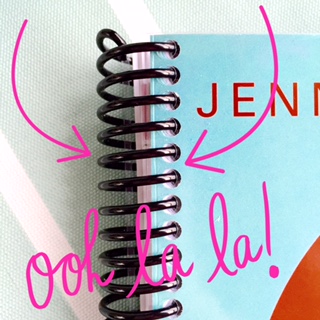
Notice anything different about my Reading Strategies Book?


Yes, I had that book bound!  
This might be the best thing ever.  

I have to give credit to Jennie Motes Smith who posted about doing it to some of her books on the Notice and Note Facebook page.  I saw her post and literally got off my couch, grabbed my book, and went to Staples.  It was done in 20 minutes and for less than $4,  The twenty minutes was good because I was in such a rush to get there I actually left my wallet home and had to go back for it!

When you get the book bound, just hand it over. They will take off the binding, put in the spiral, and add a cover to the front and back.  I got the clear cover on both sides. This is great for increasing its durability and protecting it from the coffee drips and spills I always seem to have when I'm reading.

I think binding is the perfect addition to this book.  You can lay it flat much easier, and fold it over to view just one page as shown below.  I covered the page as I wasn't sure how much of the book content I could show.  I think being able to fold the book over like this makes it much easier to handle during a lesson.  It is easier to refer to while teaching if you need to.

Unfortunately, there was one down side.  This particular book is a little large for the largest spiral Staples has.  If you look at the picture below, you can see that the book curves around the binding a bit and isn't exactly even where the book opens.


Having said that, I don't see this being a real problem.  The book handles fine, and when you have it open flat or folded in half you don't even notice it.  This book is on the thicker side.  I looked at a lot of my other professional books and most would fit without any problems.  Staples also has spirals in smaller sizes for thinner books.

On another note, I had planned to do a review of this book, but I'm sort of on the fence.  There is already so much out there about it right now.  Let me know if you would like to see a review. I will say that I do highly recommend the book.

So, that's the quick tip.  Get your favorite PD books bound!


Saturday, May 31, 2014

Weekend Words: I Like to Party!


Probably the truest statement you will ever read about me!  I remember as a kid, during family parties I would squirrel away in my bedroom and read.  My mother used to have to come and drag me out of the room to socialize with my family!  Yeah, I was that kid!

Speaking of books (and some upcoming posts). . .

  • Earlier this week I went to an AMAZING workshop by Stephanie Harvey.  You probably know her best from her book Strategies That Work. I think she is just so on target with her thinking and her books.  I will share some of the workshop with you soon.
  • Finally, for those of us still teaching (I am until June 26th!) summer reading plans are in the works.  I will share later this weekend a little "summer reading - favorite book" project I organized for fifteen classroom in my school.  It turned out to be a cute end of the year mini-project.
For now, I'm off to "party!" :-)

Friday, April 25, 2014

Vocabulary Instruction


I've been reading up on vocabulary instruction the past few months.  Vocabulary has been a concern for me this year as I notice more and more that my friends definitely need to expand theirs. It is something that my district is actually working on now to help our students across the board.

From my grad school classes, I knew a lot about vocab but wanted to read some more current work.  Earlier this week, I noticed a book had been added to a resource shelf in my school that I had actually read a couple of months ago.  It is Vocabulary for the Common Core by Robert J. Marzano and Julia A. Simms.  You can't really talk about vocabulary without having read some Marzano!

I have to say, I really like this book.  It is not so bogged down with technical terminology that your eyes cross after a while.  It's actually an easy read that is straight to the point with data to support their theories.  So, what follows is my take on what I read.  Your interpretation may vary!  Of course, I can't include everything the book covers, but I will try to highlight some of the key parts in each section.

The book is divided into three parts.  The first part has four short chapters and discusses the importance of vocabulary instruction, gives a six-step process for instruction, explains the hierarchy of words from the common core, and tells how to build a vocabulary program for an individual teacher or a school-wide program.  I am going to spend some time on Part 1 and just mention a thing or two about Parts 2 and 3.

I should note now, if you don't have a real interest in vocabulary instruction, you may find this all a bit blah, blah, blah. It is kind of long and all vocab, all the time! No hard feelings!  I get it!

Part 1: Vocabulary Instruction for the Common Core Standards

Chapter 1: The Importance of Vocabulary
This chapter goes into great detail discussing the importance and relevance of a student's oral vocabulary experiences to future vocabulary acquisition. It is amazing how significant the vocabulary gap is related to socio-economic status and how often parents speak to their children.  It creates a "cumulative disadvantage (p.7)" where this deficit of early oral language experience affects a child's ability to acquire new vocabulary in the long term.  There is data to support significant differences in vocabulary size and IQ at age 3 between children from professional families with frequent parent conversation and children from low socio-economic families with much lower parent conversation.  This isn't something we as teachers can control, so it seems to make the case for the importance of vocabulary instruction as a regular part of the school day.

Another interesting point was how having a larger vocabulary enables children (us!) to make mental categories of related words, which in turn allows higher level thinking where students note nuances in word.  This creates word choice that is more exact, expressive, and appropriate.   

The chapter ends with data supporting direct vocabulary instruction to percentile gains in assessments.  The key to this is that it doesn't support random vocabulary instruction, but the importance of "direct instruction about a targeted set of vocabulary terms. (p. 11)"  I'll come back to this point later because it is important.

Chapter 2:  A Six-Step Process for Vocabulary Instruction
This was a really interesting chapter, but one of the main points I LOVED is the difference between definition and description. I was literally saying, "Yes!" again and again as I read. Essentially it makes the point that sending children to the dictionary for a definition is often one of the least effective ways of teaching word meaning.  Yes! It is! I have always believed this. How many times have you had to explain a definition because the definition itself contains unknown words or is not relevant enough to be clear to your friends?  So, you say, "Well, it's LIKE this. . . " or, "It's WHEN. . ."  We define words by explaining and giving examples.  That is how our students usually come to understand definitions. I'm not saying the dictionary is bad at all, but it can't be the be all and end all of defining words. As noted in the book, the goal of the dictionary people is to define that term in the most succinct way they can to preserve room. They are not necessarily trying to provide the most easily understood definition or provide multiple examples to clarify meaning. This is why giving students a list of words to look up is so ineffective if we leave it at that.

The chapter focuses on a six-step process of direct vocabulary instruction with examples of how to do each step and suggested activities.  I would bet that most of us have done all the parts of this process at some point but not necessarily as part of a six-step plan of direct instruction. I think the biggest caveat to the whole process is finding the instructional time to do it all. It is well worth the time, but there is so much more we have to teach.  You would need to look at your literacy instruction time and see how it might fit.  Or, see how you can modify it to fit. My opinion is doing some of it is better than doing none of it!

Chapter 3: Vocabulary Terms From the Common Core State Standards
Oh, the common core!  It is everywhere!  Marzano and Simms review Isabel Beck's 3 Tiers of Vocabulary.  If you aren't familiar with them, THIS LINK will take you to a short Power Point created by Beck and her colleagues which explains it and provides information on vocab instruction with ELL students.  Essentially, Tier 1 words are the common words we all know: chair, dog, table, pretty, etc.  Tier 2 words are not so common in every day language, but we encounter them through experience and  in text and they become part of our language.  Tier 3 words tend to be content specific and used only in the context of the particular content, think science terms, math vocabulary, etc.  Essentially, this chapter explains how the word lists in Part 2 (tier 2 words) and Part 3 (tier 3 words) were selected.  They were words that came from the common core standards themselves and words previously identified by Marzano.  The book goes on to explain the hows and whys of the selection process.

Chapter 4: Building a Vocabulary Program
This was a very informative chapter if you are looking for a way to begin. This is where you create that "targeted set of vocabulary terms" mentioned in chapter 1. It provides a three-step process for individual teachers and a six-step process for schools/districts to use when selecting words for vocab instruction.   These are the word lists you would use in the six-step instructional model explained in chapter 2.

If I could identify one point from this chapter as significant, for me it would be the fact that teachers can, on their own, use the process described to select terms to teach, but "school or district wide vocabulary programs can be even more powerful. (p. 51)"  This is what I hope to see in my school.  Marzano does a great job of explaining how schools can form a committee to create a systematic word instruction model very simply.  It just makes so much sense to me to do it this way rather than have every teacher teach words they think are important with no correlation between grade levels and content. Marzano acknowledges that we can't teach all the words, and encourages the reader to select terms that are most relevant for them.  He even provides a ratings scale to use so that all member of a committee can rank words to really determine which they feel are most important in a more objective manner. This takes us to the last two parts of the book.

Part 2: Tier 2 Vocabulary Terms From The Common Core State Standards
This is literally a selection of words from the common core that are organized by the kinds of words they are (too much to explain here, but if you read the book you will know what I mean.) They are not categorized by grade level simply because they can appear at many different grade levels as they are those Tier 2 words that students may or may not be familiar with at different ages based on their word experiences.

Remember when I wrote about providing students with descriptions as well as definitions when defining words? Well,what I like about this section is that for each word it provides a math and language arts based description that the teacher can use when explaining a word.  This is where the nuances of words comes into play.  The connotation we have for a word in a math context may be very different for the connotation we have for the same word in a literacy context.

Part 3: Tier 3 Vocabulary Terms From The Common Core State Standards
Another list.  This time, they are those content specific tier 3 words.  Marzano took the standards and pulled related vocabulary that students need to know.  They are listed in a chart by the strands of the standards.  There is also a matrix that spans three grade levels for each word; suggested grade levels (based on the standards) for what grade the word should be introduced, practiced, and mastered.  It is an amazing list of common core words that bring order to all the academic vocabulary we need to teach.

Overall, this is a good book.  I think it is particularly useful if you want to bump up your vocabulary instruction but don't know where to start.  The lists in Part 3 are amazingly helpful if you are wondering what academic vocab you should be covering at your particular grade level. The six-step process for instruction is awesome but also time consuming. You would really have to think about how to make it work for you.  The book is not a hard read and can be read relatively quickly.  Of the 266 pages, the first 54 are essentially all of the text.  The rest of the book is almost all word lists.

I have to say, I read the heck out of this book!  If ever I needed an example of a book to show my students how to stop and jot when reading or do a close read, this book would be a perfect choice. I think it comes from being a lit major in college.  I feel like I tend to write more notes (and arrows and asterisks) than the author does text sometimes!


As I'm still knee deep in vocabulary thoughts, the book I'm currently reading is Bringing Words to Life: Robust Vocabulary Instruction by (who else?) Isabel Beck, Margaret McDeown, and Linda Kucan.
This was first published in 2002 but had been revised in 2013.  I vaguely remember reading it years ago but have forgotten enough to want to read the revised edition.  This one is slower reading, so it may be a bit before I can post about it.

So, that's where I have had my nose buried lately.  Brushing up on vocab. Do you have a specific model for vocab instruction in your school? What works for you?  I am planning on a follow-up post soon of some vocab silliness I always do with my friends that has always helped build vocab. Words can be fun!

Thursday, October 3, 2013

My Room

So, is doing a classroom reveal a month after school actually started a little like wearing white pants past labor day? I've been a total slacker when it comes to posting this past month which means room pics in October.  Sorry!  It would be great if I could say my room is done.  I'm actually about 90% there, and that's probably as good as it will get this year!  I do have a big area behind my meeting table that needs some serious straightening. Maybe in all my free time. . .  someday!

The pictures below were taken over a few different days, so that would explain why the lighting might be different or some posters might be different. I'm not going to bore you with lots of captions and explanations. Instead, I'll bore you with lots of pictures! :-) Here's a general view of the room.


~~~~~~~~~~~~~~~~~~~~~

Here's a little spotlight on some silly things about my room that make me happy.

Rubber ducks reading from Oriental Trading.  These twelve ducks sit on one of my windowsills.
 If ducks can read, so can you!

Lego blocks in my hand sanitizer for no good reason other than it's fun. They are suspended in the gel.  I have actually had to do a quick explanation on why they don't sink more than once.  This is probably the first thing kids notice when they come in my room for the first time.  

READ BOOKS.  My sister found these wooden words in Marshall's on the discount shelf.  I imagine, other than a teacher or librarian, there aren't many people who would know what to do with these. 
That probably explains them being on the discount shelf! 
But, they are perfect for a classroom where the only subject taught is reading.

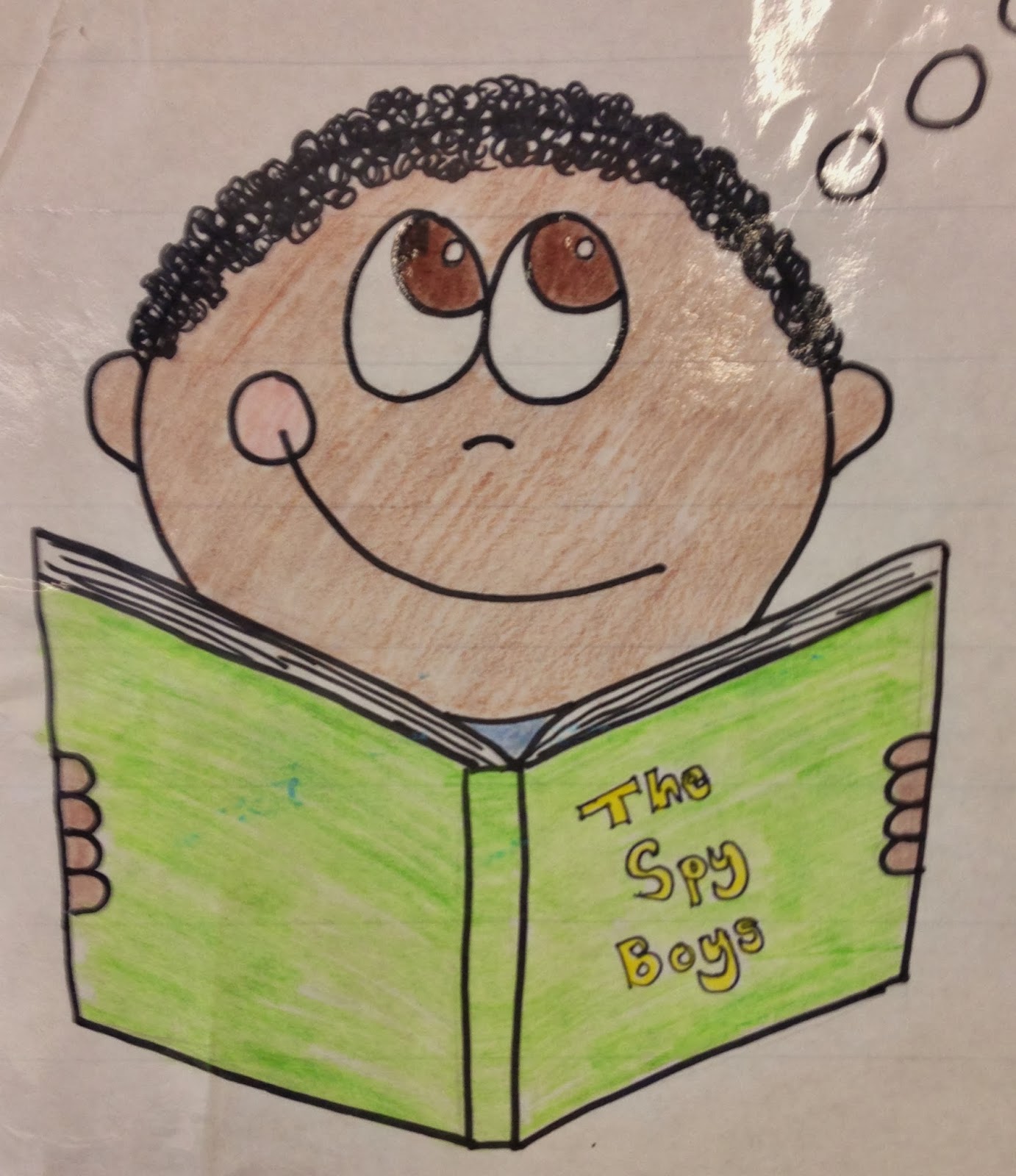
The little boy I drew on my Self-Monitoring anchor chart last year. I love it because last week a little boy walked in to my room for the first time ever.  He looked at the poster and with a huge smile and wide eyes said, "That looks just like me!"  My mom is Spanish and darker skinned.  I remember growing up being very aware that none of the families in the books we read in school ever looked like my family. Never mind actually having posters in my classroom that were culturally diverse.  It made me very happy to have that little boy come in and immediately find something he could identify with.  Even if it is just a cartoon drawing.


Pumpkin chair covers from Dollar Tree.  A little bit of Halloween fun.

My picture book shelf.  These are just a few of the picture books I use.  In fact, I'm still looking for a box of picture books that must be tucked away on a shelf.  I have one in particular in mind that will be perfect for one of my students, Bad News for Outlaws.  I  know it will totally hook my reluctant reader friend.  
Now, if I could just find it!

So, that's the room this year.  
~~~~~~~~~~~~~~~~~~~~~~~~


So far, I like it.  It has a lot of helpful information for those not totally comfortable teaching small groups or without a lot of experience teaching reading this way.  However, even being experienced with it, I am also  finding a lot of good tips.  I'll try and post more about it when I'm done.

Hope your school year has gotten off to a great start!

Thursday, August 23, 2012

YOUR Professional Goals and a Winner!

Thanks so much for your great response to my blogiversary give-away.  There were 81 entries/comments.  If you just can't wait to see who won, scroll down to the bottom of this post.  
But, if you can be patient for a minute. . . 


In entering my give-away, I asked you to comment on what your goal was for the upcoming school year.  I mentioned that mine was to do more professional reading on teaching reluctant readers.  However, I could name a million more!  But, I didn't have to.  You all came up with an amazing list of goals.  Many of you gave more than one goal.  I enjoyed reading them and was able to identify with so many. I could have added most of them to my personal goal list!

I thought you might enjoy reading them.  I categorized your goals as best I could and listed them below. Some could be in more than one category and others were tough to put in a specific category.  The ones that are in italics were mentioned by more than one person.  Other than that, they are listed in no particular order.  Overwhelmingly, it seems one of the biggest goals across the board was to implement the Daily 5 and CAFE.  Behind that, the next biggest goal was staying organized.  Isn't that one battle we all fight? :-)

So, from your comments, here are the goals you all have for this school year.  


Personal
-Get to know my students more personally 
-Make more positive contacts with students’ parents
-Find balance; less work and more family time
-Prepare for a new job
-Get a new job
-Stay positive in a year of big change 
-Provide a great year for my students 
-Work hard to be a good teacher
-“Teach my daughter the alphabet!”

Productivity/Organization
-Stay organized! 
-Better manage paperwork   
-Use my time better
-Bring less work home 
-Keep planning fresh and motivating 
-Clean out the filing cabinets
-Be more intentional in implementing the wonderful things learned from other teachers
-Stay on top of grading and filing
-Keep each nine weeks of materials in one binder for use the following year
-Take advantage of my binder system for keeping all usable plans for individual topics
-Rework one unit each trimester to be a mini inquiry project

Professional Development
-Renew National Certification
-Begin coursework for admin. Certificate  
-Finish my Master’s program in Classroom Technology
-Read at least one professional journal, text, or article each week
-Present at the Massachusetts Computer Using Educators conference
-Become more of a leader in my school
-Finish reading the Lucy Calkin’s Guide to Reading five book collection
-As the school librarian, support more teachers

Blogging
-Keep up with/update my blog  
-Start a blog
-Write more about my teaching experiences

Special Education
-Read up more on autism

Technology
-Utilize more technology in my classroom in general  
-Introduce Edmoto in my classroom
-Use less paper in the classroom
-Implement the Smartboard in math lessons
-Teach more district wide technology classes
-Become more comfortable with social media to support my teaching

LA/Lit.
-Implement Daily 5 and/or CAFÉ ideas  
-Keep up with the reading VOICES board
-Use the common core in the library
-“Step up” my writing instruction
-Integrate more group work in reading & writing workshops
-Implement more strategy grouping
-Use a binder for guided reading to help me stay focused
-Do away with book logs and make reading more enjoyable for my students
-Put a greater emphasis on poetry
-Work more on guided reading and strategy grouping within Reader’s Workshop
-Find my way through reading workshop and guided reading
-Improve word study instruction
-Use reading notebooks to keep track of skills and strategies taught & to record thinking
-Focus more on Greek & Latin roots in vocabulary instruction
-Give my students more opportunities to discover that reading is awesome!
-Introduce book clubs
-Manage time better during student conferencing

Math
-Implement guided math workshop
-Utilize the common core in math instruction
-Get state math test (scores) up
-“Amp up” math lessons in preparation for common core using more manipulatives, group work, and student instruction

General Ed.
-Implement “The Leader in Me” program in the classroom 
-Survive the common core!
-Implement the all new curriculum that is now aligned with common core
-Focus on more flexible grouping
-Improve my small group instruction
-Better classroom management to help the day run smoothly with the help of procedures
-Do more whole brain teaching
-Differentiate instruction as much as possible
-Figure out what my state test is actually looking for!
-Use journals in a more effective way
-Improve partner talk
-Encourage more true collaboration in small group settings
-Implement morning meetings

Funny!
-Get to work on time! 
-Not go insane! 
-Keep calm and carry on. . . no matter what happens!
-Relax. . . I know it will all work out!

Well, don't you think that is a pretty amazing list?  If that doesn't show how dedicated teachers are to their job, I don't know what does.  I especially like "not go insane!"  It made me laugh out loud because, oh, have I been there!


No matter what, let us all remember this. . .

Now, on to the blogiversary give-away winner!
There were 81 entries in all.  Using the True Random Generator, the winner was  number 23.  Comment number 23 was from Silvia.

* * * * * * * * * * 

Blogger Silvia said...
I have been following your blog for only a short time, but love all of the ideas and resources you offer! Thank you for your great blog!
August 15, 2012 11:18 PM
                                                                  * * * * * * * * * * 

Silvia, email me  your mailing address and I will get your goodies out ASAP!  I went to your profile and blog, but there wasn't any way for me to contact you.  So, I hope you come back and read this! :-)
Again, thanks to everyone who commented with their goals for this year.  It was fun to see what was on your mind.  And, thanks to all who come by and visited my blog.  It was a very good blogiversary!

Wednesday, February 22, 2012

THE BEST Writing Book!

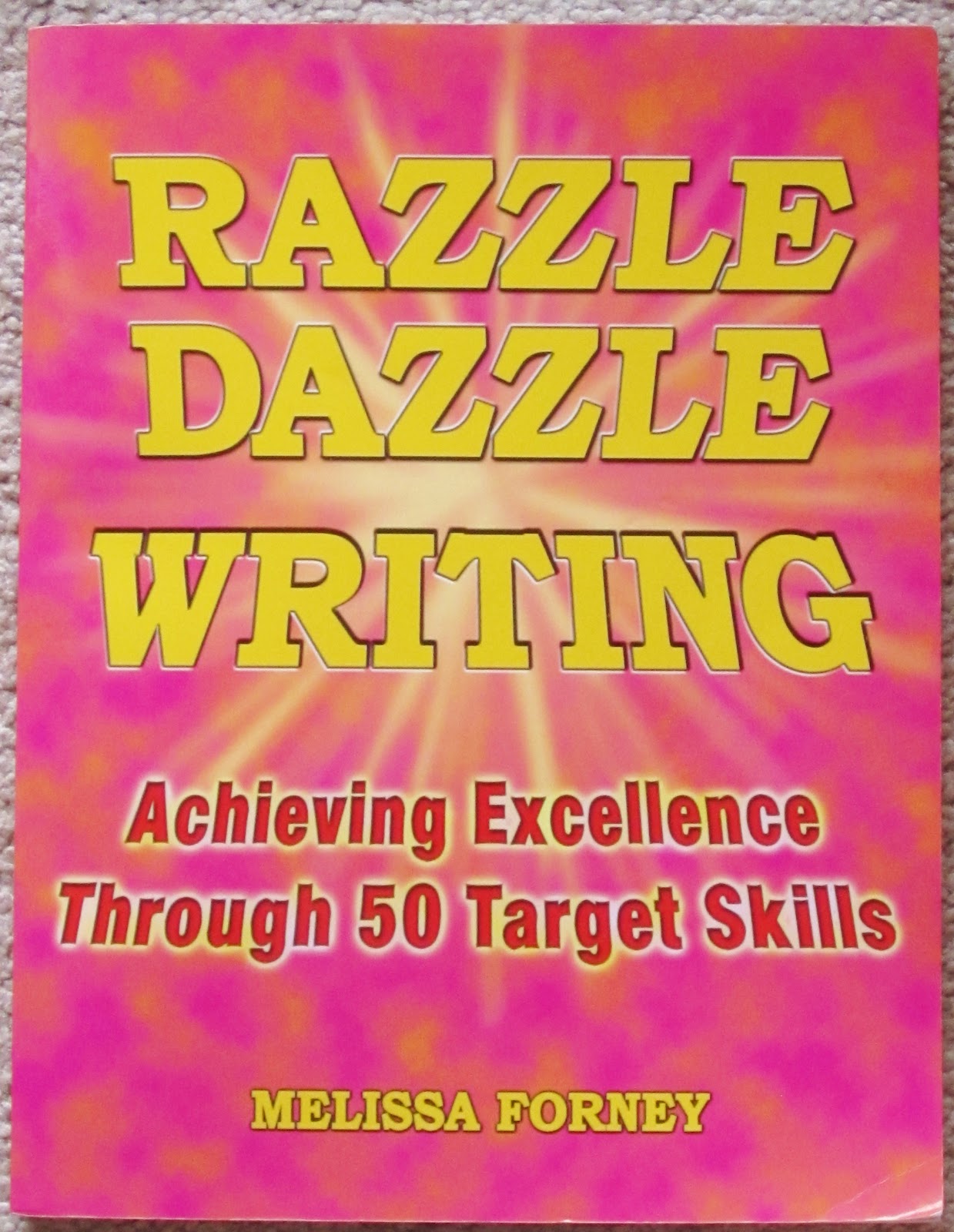
I was talking about this book with a colleague the other day.  More like singing its praises.  It was then that I thought I needed to share this resource with my blog friends.  If you teach intermediate grade writers, YOU WANT THIS BOOK!  The title of this gem is Razzle Dazzle Writing: Achieving Excellence Through 50 Target Skills by Melissa Forney.

I love this book!  It is so on-target with the skills it covers and so appropriate for intermediate grade writers.  This book is perfect for 3rd grade through middle school.  If I don't tell you another thing about it, you should just go buy the book because it is selling on Amazon.com for a very cheap $13.57!  Honestly, I would quickly pay at least twice that for this book without blinking.  Ms. Forney also has a sister book for the K-2 set called Primary Pizzazz Writing.  I haven't seen it in person, but it looks like a winner.

The pages of Razzle Dazzle Writing are meant to be copied for your friends and used as a teaching and reference tool.  Here is a checklist from the book that notes the 50 skills covered:

As you can see, the topic lend themselves to your everyday teaching throughout the year. However, this book is also great for test prep.  Ugghhhh!  I hate to even utter those words, but they are a fact of life for us these days. Let me be clear though that Ms. Forney is very clear in the book that it's not all about the writing prompt.  She does state that our friends need to know the difference between prompted writing and free writing.  I also believe this.  As much as we would like our friends to embrace writing and freely write as they are inspired, the reality is when the state test comes they are going to be directed via a prompt to do a very specific type of writing.   I used the mini lessons in this book to create an anchor chart on understanding the different types of prompts:

 And, here is another chart I created using one of Melissa Forney's lessons on using a "writing glove" to help your friends properly address narrative prompts.

Sigh!  Just noticed that I spelled dilemma incorrectly on the chart.  Will be fixing that in class ASAP.  Sorry about that!
Ms. Forney has great ideas for this mini lesson.  The book even includes reproducible gloves for your friends to cut out and put on a stick.  The creation of these two anchor charts is directly inspired, if not copied, right from Razzle Dazzle Writing.  I tweaked a bit for my friends, but the book is so well put together you can essentially photocopy what you need and do your lesson with minimal prep.

Razzle Dazzle Writing includes tons of pages you can copy for your friends to keep as reference, there are also poems and reader's theater scripts that are included to reinforce many of the lessons.  The poems are fun and easily understandable for your friends.  The reader's theater scripts get right to the point in a fun way , yet they are short enough to be done as part of a mini lesson.  I have yet to find anything in this book that isn't a perfect fit for my friends.

Melissa Forney has an incredible web site where you can learn more about her books and philosophy.  Click HERE to be taken to Forney Educational, Inc.   There are also free downloads available on the site.  THIS PDF DOWNLOAD is for a booklet titled Young Writer's Survival Guide.  It is an excellent resource for your friends.  Many of the topics in this guide are topics covered in more depth as different mini lessons in Razzle Dazzle Writing.  That PDF alone should convince you to buy the book!

So, have I gushed enough?  I hope so!  This is not a paid endorsement.  This is a post on a book that I find myself going back to again and again and think you will, too.  If you know this book, please share your thoughts.  If you end up getting this book, let us know how you like it.

On a totally different topic, every time I think of the name of this book, it makes me think of this scene from the movie Stripes with Bill Murray.  I know, totally dating myself yet again!

Also, don't forget to enter my giveaway to win a copy of Testing Miss Malarkey and assorted other goodies!  

Tuesday, February 14, 2012

A New Book on Valentine's Day

Look familiar?

Yup, I made the paint swatch bookmarks for my friends.  I chose pinks and reds for my girls and blues for my boys.  I figured that 5th grade boys might be a bit picky about pink and red bookmarks, Valentine's Day or not.  Turns out going with the blue was a good choice.  I did add some silver ribbon to both.  The kids really loved them.  I think I am going to make them again for St. Patrick's Day with some green swatches.  I could find a rainbow ribbon for the tassel.  Wouldn't that be so cute?!

Of course, nothing is ever as simple as it seems.  When I first got the paint swatches, I grabbed these:
Yeah, Hot Passion Pink. Oh my!  Didn't notice that until after I had already left the store.  Now, I personally wouldn't have a problem with it, but you never know how a parent will react.  It only takes one!  So, the next day I headed back to the store to get a new set of pinks and reds that wouldn't cause any conflicts.  Better safe than sorry!  By the way, I noticed on Pinterest someone commented that taking the swatches was kind of like stealing.  I went to two different home improvement stores and simply asked if I could have some paint swatches for a school project.  They were both happy to oblige. :-D

So, we had cupcakes, bookmarks, and played a rousing game of Heartbreakers.  And, my friends were very generous.  I got these yummy chocolates. . .

Usually, when I get chocolate treats like this, I open them in class and share them with my friends.  Stops me from eating them all!  However, this year I have a couple of friends with EPI pens, so that wasn't an option.  Guess I will have to suffer through and enjoy them on my own.  Oh, what I won't do in the name of good teaching! ;-)   I also got this gorgeous orchid.  It really is this color.  I didn't alter the color in this picture one bit!

 All in all, a lovely Valentine's Day with my little friends!


Then, when I got home today, there was a nice little package waiting for me from the International Reading Association.  I opened to find this book that I had recently ordered.
Small Group Reading Instruction: Differentiated Teaching Models for Intermediate Readers, Grades 3-8 by Beverly Tyner and Sharon E. Green.  This is the second edition of the book.  It looked really interesting, and I was looking for some new, relevant professional reading.  One of the things I liked was the resource CD in the back of the book.

Here's the blurb that sold me.  It's right off the IRA web site.

With the pressure of high-stakes assessments and heightened demands through the Common Core Standards, the quest for effective reading instruction continues to be at the forefront of education. Teaching reading in the intermediate grades brings the added pressure of content area mandates. Keeping in mind this increased pressure to succeed, Beverly Tyner and Sharon Green have revised and expanded their best-selling Small-Group Reading Instruction.
Chapters provide the knowledge base and practical application models necessary to implement small-group differentiated reading instruction for a wide range of readers in the intermediate grades. To help you provide struggling and proficient students with the specific instruction that will increase their overall reading ability as they face higher standards, Beverly and Sharon offer
  • Lesson plans for each intermediate reader stage—intervention, evolving, maturing, and advanced
  • Sample lessons that include both narrative and informational texts and in-depth teacher–student dialogue
  • Reading and writing extension activities that reinforce grade-level standards
  • Management ideas and tips, including classroom routines, organizational models, and sample schedules
  • Assessments that support the small-group differentiated reading models and can be used to track progress in fluency, word study, and comprehension
  • A CD with printable PDFs of assessment, word study, and support materials
At a glance, it looks like a great resource.  When I got home,  I opened the package and quickly snapped some pictures to include in this post.  I've literally had the book for only 30 minutes, so I've not had a chance to really look through it in any depth yet.  But, I'm excited to see what it holds.  If you know this book, please leave a comment and tell us what you think.  I'm not sure how soon I will be able to get to it, but once I read it I will come back and let you know my thoughts.

So, that's been my day.  I hope you and your friends had a spectacular Valentine's Day!


Sunday, January 29, 2012

The Continuum of Literacy Learning

Do you know  this book?
It's The Continuum of Literacy Learning: A Guide to Teaching
by Fountas and Pinnell.
The picture and link above is the book I have.  It was published in 2007.  This link will take you to the second edition pictured below, which was published in 2010.  Both pictures are for the grade 3-8 book, but there is also a preK-grade 2 edition.

If you do guided reading groups or any kind of leveled literacy instruction, I would say this book is a great resource to have on your shelf. So, what's the book about?  It focuses on seven continuum of literacy learning:
1.  Interactive Read-Aloud and Literature Discussion
2.  Shared and Performance Reading
3.  Writing About Reading
4.  Writing
5.  Oral, Visual, and Technological Communication
6.  Phonics, Spelling, and Word Study
7.  Guided Reading

The introduction explains that "This learning continuum. . . is designed to help educators teach from the specific body of understandings that students must acquire to become highly effective users of oral and written language.  With this foundation, you can set clear goals for learning and plan specific lessons across many instructional contexts." (From page 1 of the first edition)

So, what does all that mean?  Let me show you how the book is set up.  It begins with an introduction chapter that explains the seven areas above.  Then, we have the lovely tabbed sections! For the purposes of this post, I am really just highlighting the reading and guided reading information.


Behind the grade level tabs, you will find "a general guide to the kinds of understandings students will need to acquire by the end of each grade."    But, wait! There's more! (Don't I sound like I'm selling Ginsu Knives?) Each grade level give you specific, detailed information on "behaviors and understandings to notice, teach, and support" in bulleted lists.  It will do this for each continuum, 1-6, that I listed above.  As I said, it does it in great detail.  It will guide you in setting grade level specific learning goals, curriculum goals that will have your friends thinking within, beyond, and about the texts they read.

The glossary tab section defines pretty much any literacy term you might ever come across.  It's nice to have because, really, you can't expect every teacher to know every literacy term out there.

Here is my favorite section.

Each level gives you explicit information in several areas.
  • It will describe what you can expect, in general, of readers at that level.
  • There is also a tremendous amount of information on selecting texts for that grade level.  It goes into detail about genres, text structure, content, theme/ideas, language and literacy features, sentence complexity, vocabulary, word decoding, illustrations, and book and print features.
  • Another area of information explains the demands of the text at this level.   Essentially, this is the area that is helpful in planning the different components of your guided reading lesson.
  • The final topic of information covered is how to plan for Word Work at this particular guided reading level.
Honestly, I don't think you could ask for more.  This book is good for everyone.  I think new teachers sometimes have difficulty understanding just what students at different grade levels should know or are capable of.  This comes simply from a lack of experience in the classroom.  This book would give you a good reference of all that information.  If you are new to guided reading or any sort of leveled literacy instruction, this book explains it well.  In fact, in the beginning there is a nice chart explaining the structure of a guided reading lesson.  Finally, for those of us that have experience with guided reading, it's a good resource to have.  Sometimes, it can be easy to fall into planning for the same old learning goals.  This would be a good resource to browse through and see what we haven't focused on lately.  It would also be good for setting remediation or enrichment learning goals.
Here is a sample page from the book to give you an idea of how it is set up.  This is the first page of the section for guided reading level R.  I should note that if you are doing guided reading, but not using the Fountas and Pinnell leveling system, you can still use this book.  The grade level sections are very much on target.  There are also tons of level correlation charts around the web.  You can always just find what the Fountas and Pinnell level is equal to in the leveling system you use. 

I'm sure I have not done this book justice with this review.  There is so much more it's great for than the little bit I've mentioned here.  If you ignore the reading stuff completely, the writing information alone is worth the price of the book.  By the way, if you click the book links it will take you to Amazon.  The books run from  about $25-$32.  Not bad for professional reading!  I should also mention that I haven't seen the second editions in person.  I am assuming it is probably just a somewhat revised version of the first.

If you have this book, please feel free to comment about it.  I would love to know what you think.

By the way, as always, all opinions here are my own.  I am not being paid in any way to endorse this book.  I just like it a lot and wanted to share. :-)